The brief#
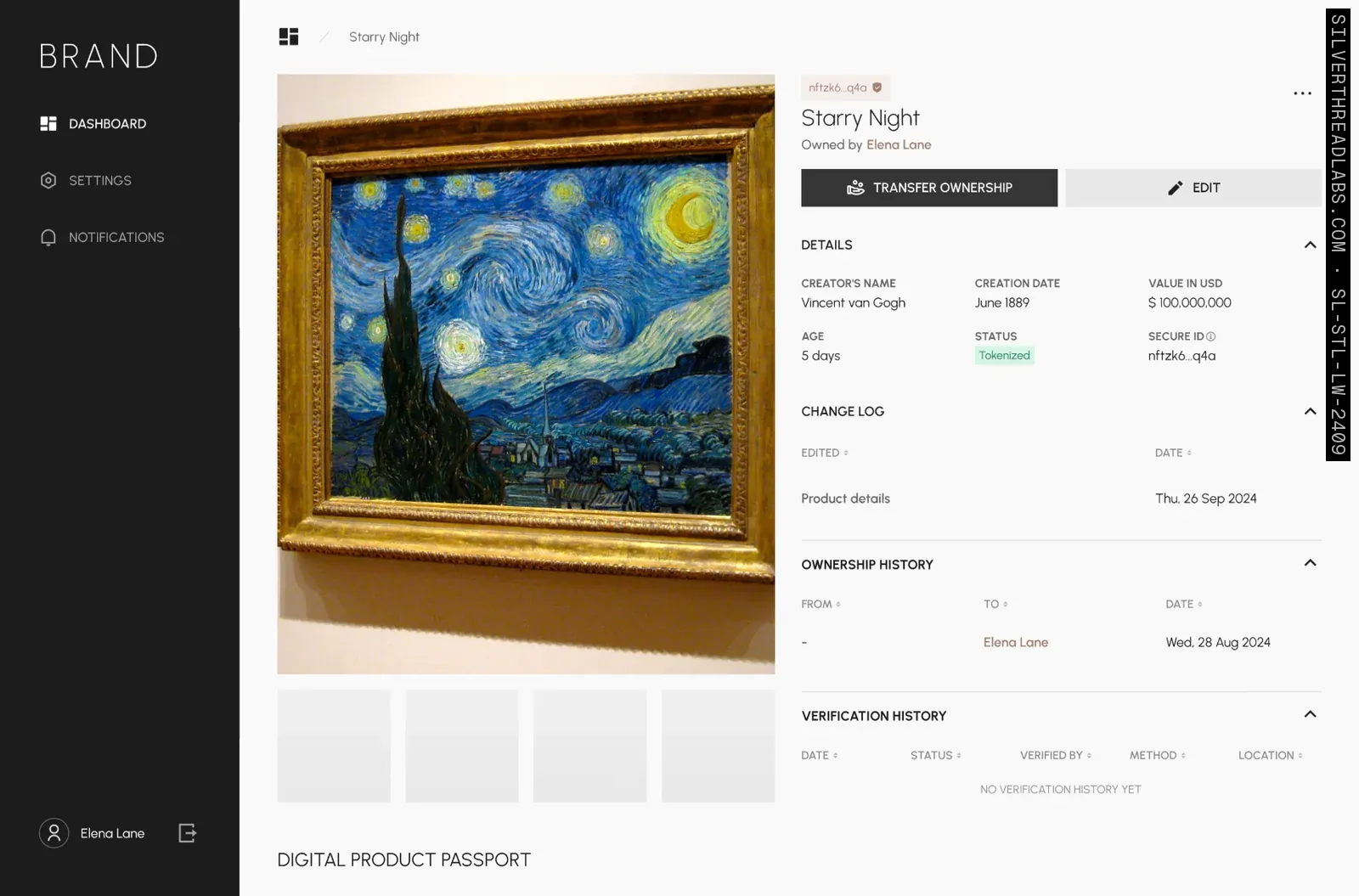
We designed and built Luxkey for Chia Network: a phone app that checks a luxury product and hands it to its next owner, and a dashboard where a brand mints the product's digital twin, a permanent record on Chia's blockchain that proves it is genuine and keeps its owners and its history. Chia's COO was pitching that to luxury houses, and a slide could only describe it.
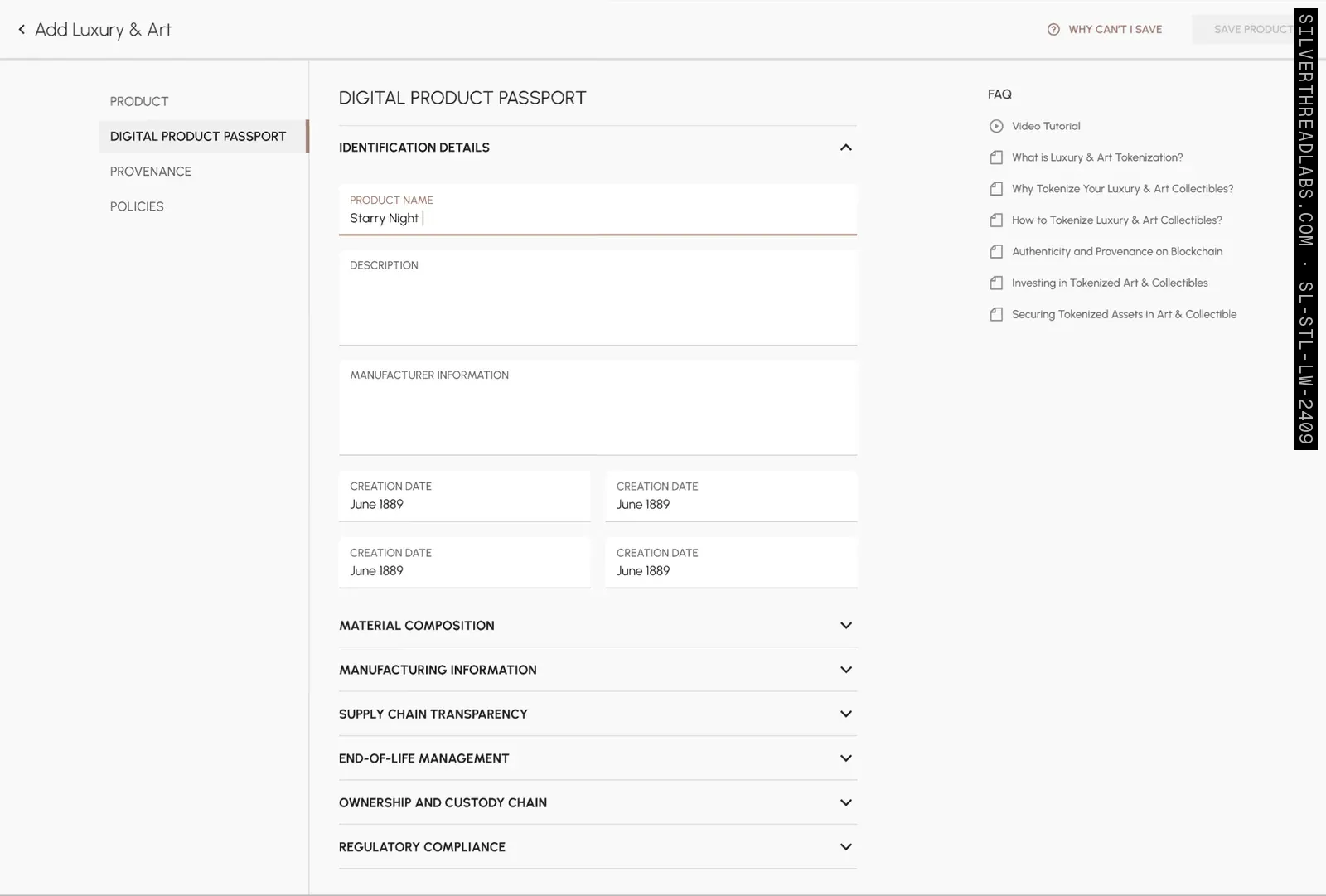
Chia first asked us for screens. Saif Pasha worked out with the COO and Chia's engineers what a luxury brand would need, then designed both halves: the owner's app, and the dashboard where each product gets its Digital Product Passport and rules such as a royalty on each resale or a window when it can't be resold. After one of Chia's meetings, the person it had met took the designs away for her wider team.
A working app for the board#
Chia next asked for a clickable prototype for a board meeting on a date already set. A prototype can fake a scan but never perform one, so Saif persuaded Chia to drop it and built a real app: React Native with Expo, one codebase for iPhone and Android, and Supabase holding the accounts and data.
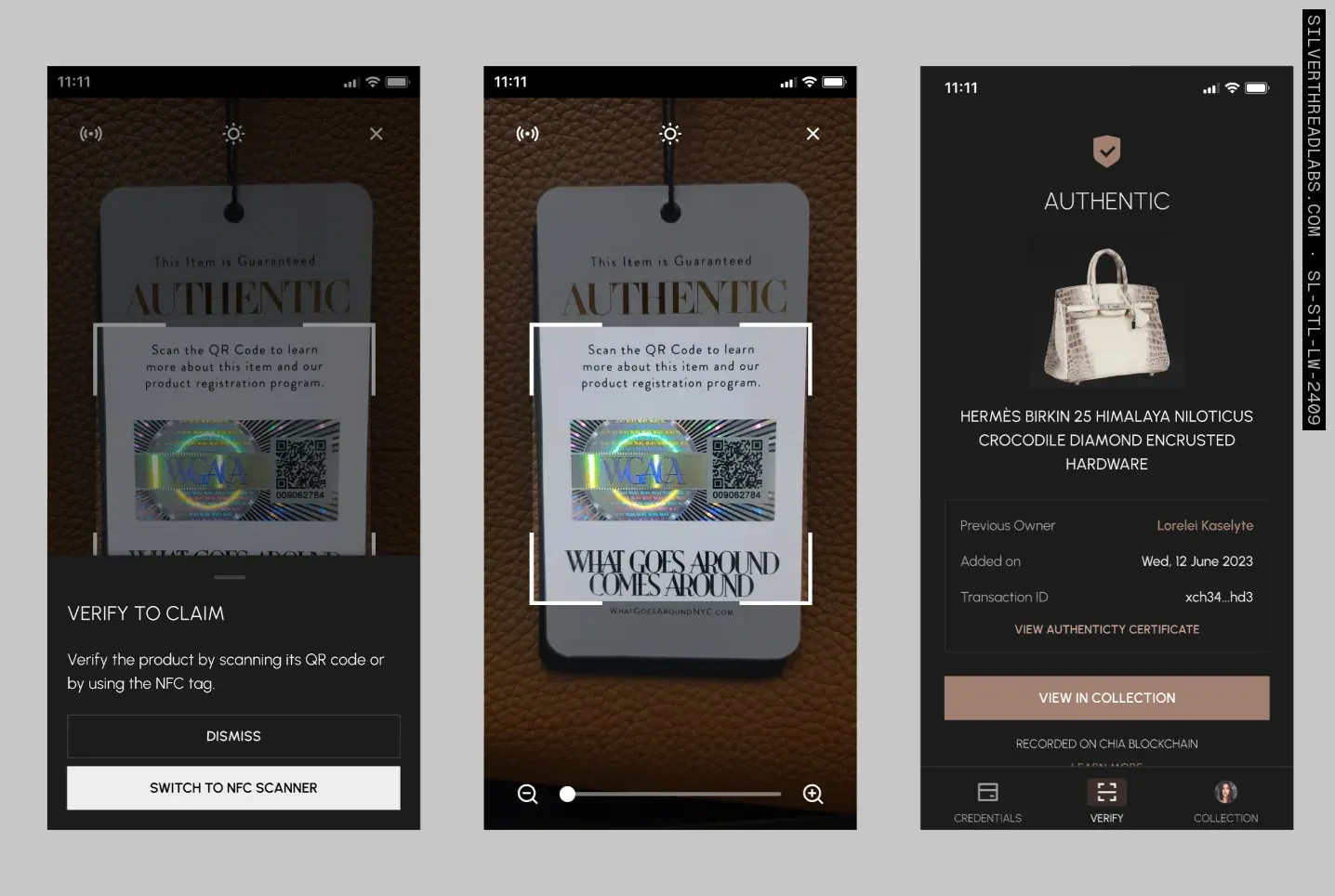
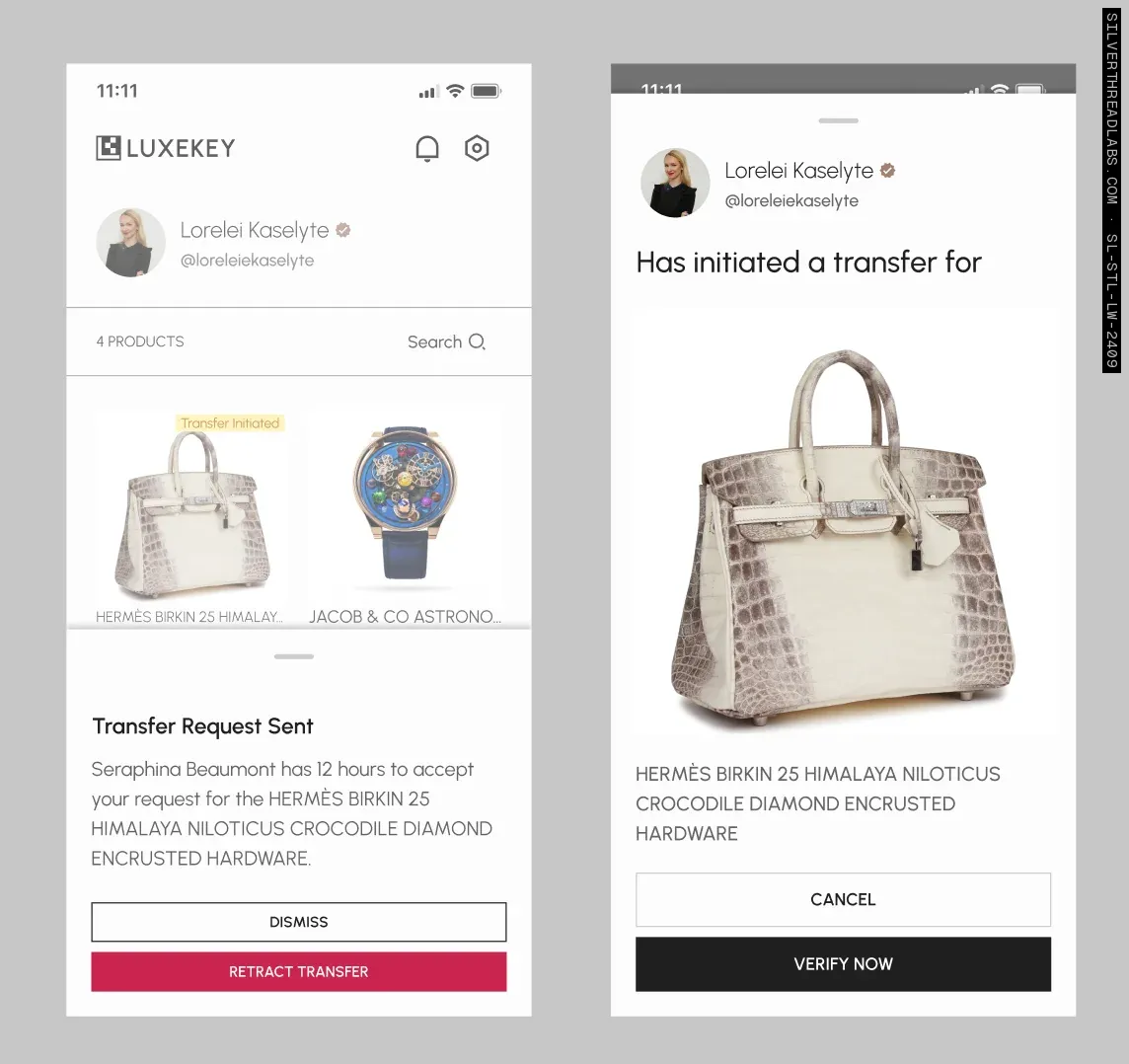
An owner sends the product to a chosen buyer, whose phone shows the request at once. The buyer accepts, then claims it by scanning its tag, and only that product's own tag completes the handover. Any other tag brings a plain warning that it isn't authentic. Sellers get a light theme and buyers a dark one, so a room watching both phones can tell them apart.
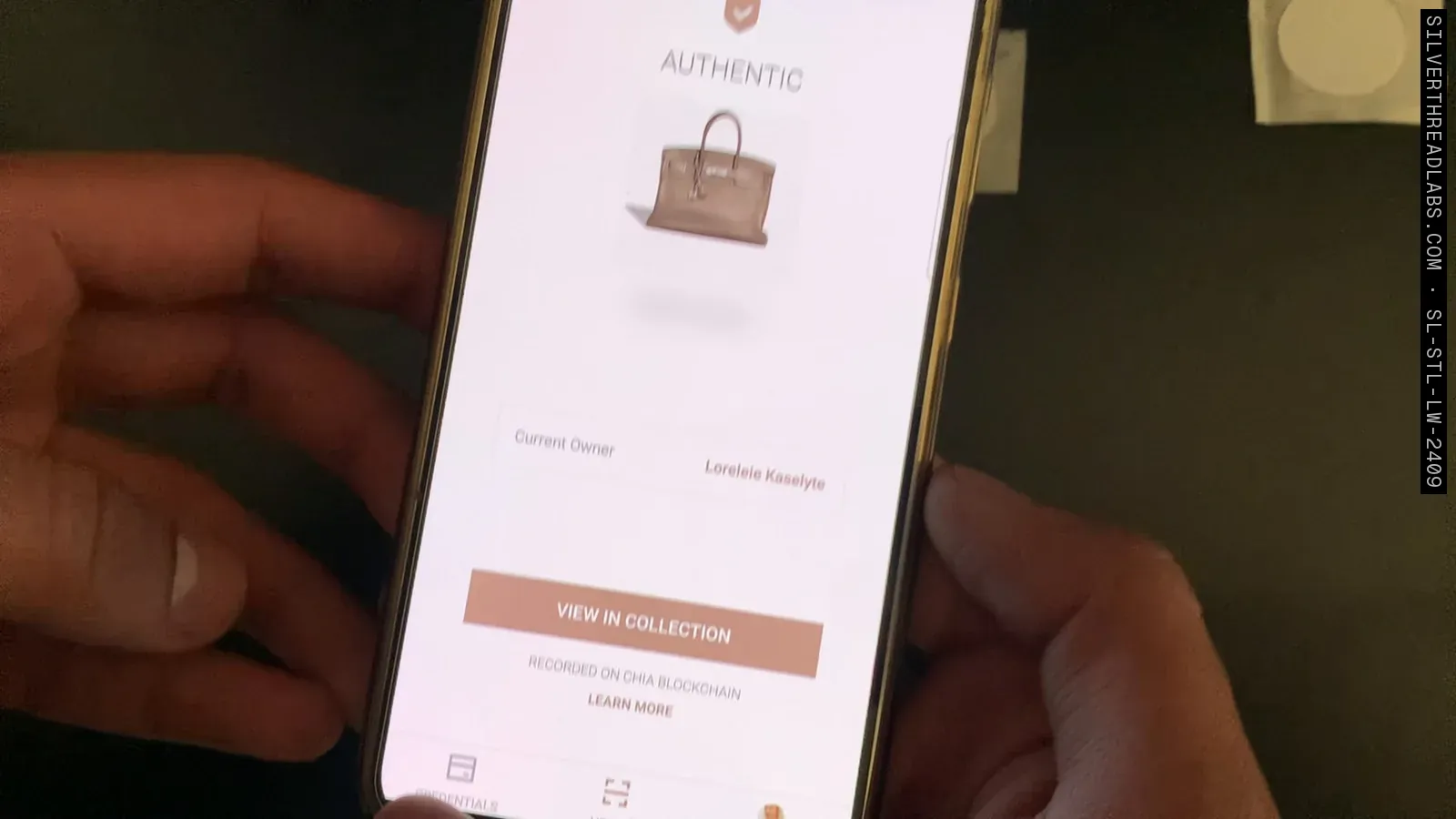
With no Apple developer account yet, Expo Go ran the app on two iPhones for the board. Only the boardroom Wi-Fi failed, and about two hours before the demo a phone hotspot fixed it. On a real luxury bag Chia had bought, anyone who raised a phone to its tag saw its record come up.
The hard part: moving ownership onto the chain#
An ordinary database had carried the board demo, but the idea was a record no one could quietly alter. The next version had to put every product and its ownership on Chia's blockchain. Chia's engineer on the project built that side as an API over Chia's wallet, and Saif built the app and the dashboard on it.
The chain set two conditions. Chia's wallet syncs a single key at a time, at an unpredictable pace, so a transfer could hang in front of an audience. And a minted product's details are permanent, which suits a record of authenticity and is awkward for a brand that finds a typo.
For the first, Chia's engineer switched the demo to Chia's blockchain simulator, where every wallet stays in sync on a single machine, and our team set it up and developed against it. For the second, the dashboard warns the brand, then burns the old token and mints a corrected one, so the brand stays on record as the maker.
The dashboard and the tap#
A brand starts in the dashboard Saif built. There it adds a product, fills out its passport, covering materials, recycling and past owners, and tokenises it, minting it on the chain. The owner's app then shows the same product, with its passport, its owners and each check made on it. For Chia's next board meeting, Saif recorded and narrated one walkthrough of the whole flow, from tokenising a product to handing it on.
A few months on, with luxury meetings ahead, Chia wanted a tag inside the product that a phone could read with a tap, replacing the first app's printed QR code. react-native-nfc-manager needs native code that Expo Go can't run, so our team moved the app to bare React Native. Each NTAG213 or NTAG215 tag holds one UUID v4, the product's ID, and we tested on two real tags and a third whose ID no product owns. The iPhone version for those meetings came from Chia's own engineers.
The outcome#
Luxkey went before Chia's board twice, and the COO reported that the second meeting had gone really well. Chia also demoed Luxkey to luxury houses, among them Dior, Versace and Chanel. In February the COO carried the NFC version through a week of luxury meetings and came back lining up follow-ups with two customers. After that, Chia moved the app's database to its own account to keep demoing Luxkey by itself.
Chia came away with what a slide could only describe: a luxury product, recorded on its own blockchain, that anyone could verify or pass to a new owner with one tap of a phone.


